2. Continuing with inverses, i also understood that the inverse of its parents function is always parallel to the parent function. Lets take for a fact x^2, this is a parabola rite? and it kind of looks like this...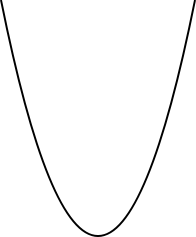
Now the inverse of this function looks like this...
do you see the connection between these two graphs? Both are parallel and we can see that if we graph y=x, the inverse of the parent function is just a reflection of the parent function.
3. Staying on the topic of inverses, i understood how to find the inverse of a function. To find the inverse of a function, f(x), u need to replace x with y and solve for y. Lets take the problem f(x)=3x-2. First you set the equation to x=3y-2 and then you ad 2 to the other side to cancel out the 2 on the right side leaving you with 2+x=3y. Now you divide by 3 to give you 2+x/3=y. Simple as that, now you have the inverse which is 2+x/3=y.
4. In logarithms i learned that the inverse of any exponential function is always going to be a logarithm, for example the inverse of f(x)=5^x is going to be log 5 x.
- What i really do not get at all is how to graph logarithms. For me it is just a little too complicated.
- I really get this but not the problem that is found in HW C2 number 44, f(x)=50/1+1,1^x

No comments:
Post a Comment