Tuesday, November 24, 2009

Clleges!! :O

  1. the first major i found that interested me is Restaurant and food services managment, in the buisness major. I learned that tis major can make someone manage a small coorporation or basically any food service.

the scond one that i found that interests me is the is the culinary arts major. I learned that entering this major can sometimes make or brake peoples decision in finishing this major because of all the critisism and long hours you have to put into this.

the last major that i found that interests me is the Entrepreneurial Studies major. I found out that being an entrepreneur can make peoples lives easier because they usually always think of something that will improve or make people's lives easier.

2. One university that caught my attention was University of San Francisco. This specific university caught my attention because it is in california but yet it is not in LA. I learned that there is only 15% of hispanics and 39% of the students there are male. I also found it kind of interesting that onlly 29% of the students graduated HS with a 3.7 or higher.

Another college that interested me was the Art Institute of California: Los Angeles. I have heard of this place a lot through comercials and through visitors that have gone to poly and this school for some rason really really interests me! hahha The only thing that is holding me back is that i learned that if i major in this i can't major in something else that intrests me like another major in business but i really like this school

The third school that interested me was the Art Institute of California: Orange County. I think i like this one better than the one at the top although they are the same but in different countys. I like this one better because in this one you can stay in the university n get a bacholers degree, i think i misspelled it :O. I learned that 4 of the students are hispanic, 52% are men, and 25% are part time students. I LIKE THIS ONE ALREADY hahah :D

Sunday, November 22, 2009

TIPS & HINTS

  1. I found transformations easy to remember, how i remembered them is that when a number is being addd or subtracter to X inside parenthesis the graph shifts to the left or right. Now the tricky part is this, if the number is being added it moves to the left,the negative side, and if it is being subtracted it moves to the right, the positive side. The other thing is that if a number is being addd or subtracted out of the parnthesis, it is gona shift up or down. This one is not like the other, if it is added it moves positive, up, if it is subtracted it moves negative, down.
  2. Now about trigonometry, i memorizd it because well mr. kind drilled it in our heads hahah.....thats the only reason i memorized it because he taught it to us for a long time untill everyone got it. All i can honestly say is that if you dont get it, ask Ms. Hwang or any of your past teachers to help you.
  3. Hmm what troubles me right now is solving for natural logs. I still cant quite memorize how to solve for them completely.

Saturday, November 14, 2009

Logs and inverses


1. Well lets start with inverses. From this subject i understood the concept of one-to-one fast and with no problems. I understood that in order for a a one-to-one to come about, f(x) needs to be a function and so does its inverse, f^-1(x). To test if f(x) is a function the vertical line test has to be done, if for every line only one point is touched by it then it is considered a function. Now that we know f(x) is a unction we need to confirm it being a one-to-one so we have to use the horizontal line test on f(x) to see if its inverse, F^-1(x), is also a function. For the horizontal line test, if no more than one point is touched in a line then it is also considered a function, therefore it is a ONE-TO-ONE.

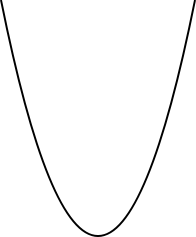
2. Continuing with inverses, i also understood that the inverse of its parents function is always parallel to the parent function. Lets take for a fact x^2, this is a parabola rite? and it kind of looks like this...
Now the inverse of this function looks like this...
do you see the connection between these two graphs? Both are parallel and we can see that if we graph y=x, the inverse of the parent function is just a reflection of the parent function.

3. Staying on the topic of inverses, i understood how to find the inverse of a function. To find the inverse of a function, f(x), u need to replace x with y and solve for y. Lets take the problem f(x)=3x-2. First you set the equation to x=3y-2 and then you ad 2 to the other side to cancel out the 2 on the right side leaving you with 2+x=3y. Now you divide by 3 to give you 2+x/3=y. Simple as that, now you have the inverse which is 2+x/3=y.

4. In logarithms i learned that the inverse of any exponential function is always going to be a logarithm, for example the inverse of f(x)=5^x is going to be log 5 x.

  • What i really do not get at all is how to graph logarithms. For me it is just a little too complicated.
  • I really get this but not the problem that is found in HW C2 number 44, f(x)=50/1+1,1^x

Saturday, November 7, 2009

Even and Odd functions

Even Functions: Well for even functions we need to first know the mathematical form, which is f(-x)=f(x). What this really means is that for every input of positive x the output will be the same if you plug in -x. Graphically this means that once you have the points you want plugged in on quadrant I the quadrant right next to it, quadrant II, will have the same Y and X value, just that X will be negative in quadrant II. This is a little confusing but yet its the clearest i could make it. Lets look at the graph below, y=x^2. Do you see how Quadrant I and II are practically a reflection of one another, and Quadrant III and IV are an exact reflection of one another? Well that's what it is practically meant by f(-x)=f(x).


Odd functions: Well for odd functions I think will be a little easier to explain, the mathematical form for an odd function is f(-x)=-f(x). With this function, it is trying to be explained that whenever point (x,y) lie on the graph then so is (-x,-y), if point (x,-y) lies on the graph then so is point (-x,y). It is just the opposite. not opposite like the even functions but like opposite as if the point went 180 degrees on the graph. For example if the point (2,3) then in an odd function another point is going to be (-2,-3). Look at the graph below to see what exactly I'm saying.